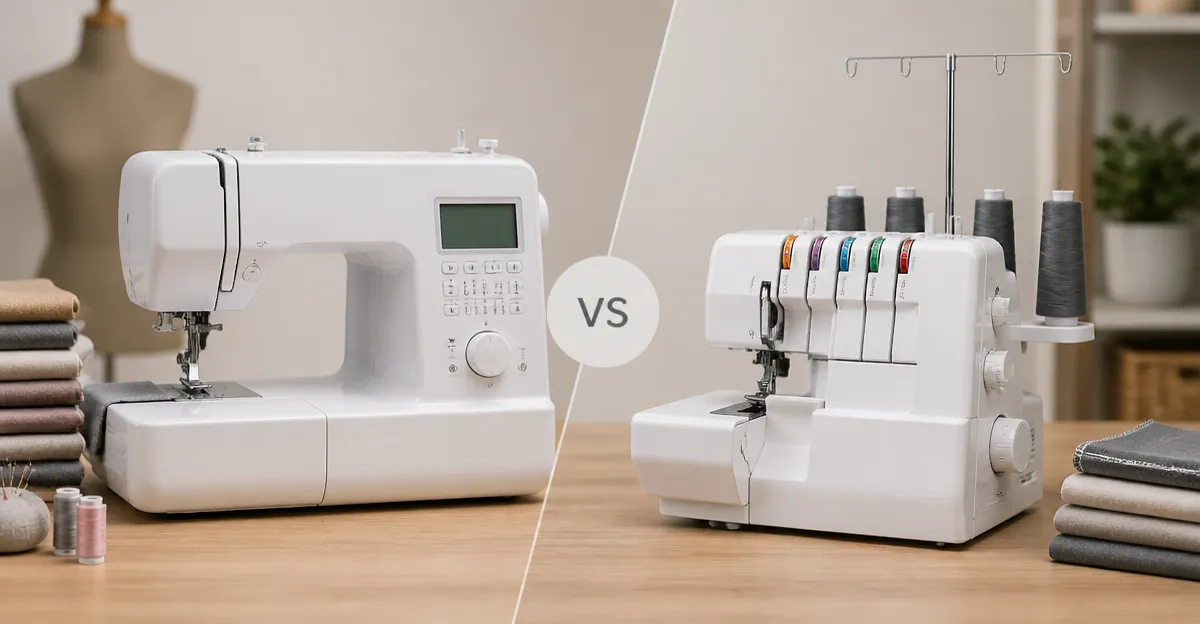
Combo Sewing Machine vs Separate Serger: Buying Guide
Introduction
The modern sewist often faces a strategic decision: invest in a single combo sewing machine that incorporates serging capabilities, or purchase two dedicated units—a standard sewing machine and a separate serger. This guide explains the essential considerations, clarifies technical terminology, and presents product recommendations that align with diverse skill levels and project requirements. Readers will learn how to evaluate performance, assess ergonomics, and calculate long‑term value. By the end of the article, one will be equipped to make an informed purchasing decision.
Background and Context
A standard sewing machine creates a lockstitch by interlocking a top thread with a bottom bobbin thread. It excels at constructing seams, attaching zippers, and creating buttonholes. A serger, also known as an overlock machine, trims fabric edges while simultaneously stitching them together using multiple threads, typically three or four. This results in professional‑looking finishes that resist fraying. Understanding the functional differences between these machines provides a foundation for comparing combo models with separate units.
Combo machines attempt to merge these capabilities into a single chassis, often sharing a motor and control panel. While space‑saving, combos may compromise on speed, stitch variety, or durability compared with dedicated machines. Separate machines allow each device to be optimized for its primary function, offering higher stitch rates and more specialized features. The choice therefore depends on workflow, budget, and the types of projects a sewist intends to undertake.
Key Concepts for Decision‑Making
When evaluating options, consider the following criteria:
- Stitch Capability: Number of built‑in stitches, buttonhole options, and overlock functions.
- Speed and Power: Stitches per minute (SPM) and motor wattage, which affect performance on heavy fabrics.
- Ease of Threading: Color‑coded guides, automatic needle threaders, and LED‑assisted looper threading.
- Build Quality: Metal frames, fixed needle bars, and differential feed mechanisms that enhance durability.
- Footprint and Portability: Dimensions, weight, and the presence of a free arm for cuffs and sleeves.
- Price and Warranty: Initial cost, warranty length, and availability of technical support.
Each of these factors influences the overall user experience and long‑term satisfaction. The following sections recommend specific products that excel in particular categories.
Recommended Products for Different Scenarios
Beginner-Friendly All‑In‑One Solution
The Brother XM2701 offers a portable, lightweight design with 27 built‑in stitches, an automatic needle threader, and a one‑step buttonhole. Rated 4.6 stars by more than 19,000 reviewers, it provides reliable performance for basic garments, home alterations, and introductory quilting. Key specifications include a drop‑in top bobbin, six quick‑change feet, and a free arm for sewing cuffs and sleeves. The machine is priced at $129.99, making it an economical entry point for those who desire both sewing and limited overlock functions without investing in a separate serger.
Dedicated Serger for Professional Finishes
The Brother 1034D Serger delivers 1,300 stitches per minute, a metal frame, and a 3/4‑lay‑in threading system that simplifies setup. With a rating of 4.6 stars from over 12,000 users, it is praised for its durability and ease of threading. Features such as differential feed, snap‑on presser feet, and four‑thread overlock capability make it suitable for denim, knits, and decorative edges. Priced at $269.99, it represents a mid‑range investment for sewists who require high‑quality overlock stitches without the compromises of a combo unit.
Versatile Computerized Sewing and Quilting Machine
The Brother CS7000X provides 70 built‑in stitches, seven one‑step buttonholes, and an LCD display for precise stitch selection. With a 4.5‑star rating from 3,681 reviewers, it balances feature richness with user‑friendly operation. Its metal frame, fixed needle bar, and large needle‑to‑arm workspace support both garment construction and larger quilting projects. The inclusion of a detachable wide table, ten presser feet, and a protective case adds considerable value at $279.99.
Compact Yet Capable Serger for Emerging Designers
The Janome MOD-8933 offers 3‑ and 4‑thread overlock options, a lay‑in threading system with color‑coded guides, and differential feed. Reviewers rate it 4.5 stars, noting its suitability for denim, knits, and beginner projects. Although priced slightly higher at $299.00, its compact footprint and metal construction make it an attractive choice for sewists with limited workspace who still desire professional‑grade finishes.
Heavy‑Duty Serger for Robust Performance
The Singer HD0500S combines a 20 % higher‑wattage motor, LED‑assisted looper threading, and a free arm design. With a 4.4‑star rating from 1,610 users, it is recognized for its power and durability when handling thick fabrics such as denim and canvas. It offers 2‑, 3‑, and 4‑thread configurations, six stitch types, and a stitch rate of up to 1,300 SPM. At $309.99, it serves advanced users who need a reliable workhorse alongside a dedicated sewing machine.
Comparison and Selection Guide
The table below summarizes the most relevant specifications for each product, allowing readers to compare side by side.
| Product | Type | Stitch Options | Speed (SPM) | Key Feature | Price (USD) | Rating |
|---|---|---|---|---|---|---|
| Brother XM2701 | Combo | 27 built‑in stitches, 1‑step buttonhole | ~800 (estimated) | Automatic needle threader, free arm | 129.99 | 4.6 |
| Brother 1034D | Serger | 4‑thread overlock, 3‑thread, rolled hem, flatlock | 1300 | Metal frame, differential feed | 269.99 | 4.6 |
| Brother CS7000X | Sewing | 70 stitches, 7 buttonholes | ~850 (estimated) | LCD display, wide table | 279.99 | 4.5 |
| Janome MOD-8933 | Serger | 3‑ and 4‑thread overlock, rolled hem | 1300 | Lay‑in threading, compact size | 299.00 | 4.5 |
| Singer HD0500S | Serger | 2‑, 3‑, 4‑thread, 6 stitch types | 1300 | LED looper, heavy‑duty metal frame | 309.99 | 4.4 |
For sewists whose primary focus is garment construction with occasional decorative edges, a combo such as the Brother XM2701 provides sufficient versatility at a low cost. Those who regularly work with stretchy knits, denim, or require professional overlock finishes should consider a dedicated serger; the Brother 1034D and Singer HD0500S excel in speed and power, while the Janome MOD-8933 offers a more compact footprint.
If quilting is a central activity, the Brother CS7000X supplies a generous stitch library and a detachable wide table that simplifies large‑area projects. Users who desire both sewing and serging in a single workspace may opt for a combo, but must accept potential trade‑offs in stitch speed and durability.
Best Practices and Tips
- Maintain consistent tension by testing on scrap fabric before beginning a project; most machines provide tension charts in the manual.
- Utilize the automatic needle threader on the Brother XM2701 and CS7000X to reduce eye strain and speed up setup.
- When using a serger, always engage the differential feed when sewing stretchy fabrics to prevent distortion.
- Keep a spare set of needles and bobbins; high‑speed stitching can dull needles quickly, especially on heavy materials.
- Regularly clean the bobbin area and remove lint; jam‑resistant designs still benefit from routine maintenance.
- Take advantage of online video tutorials that demonstrate threading procedures; visual guides often clarify steps that written manuals describe briefly.
- Store accessories such as presser feet in a labeled container to avoid loss and to streamline foot changes during multi‑step projects.
Frequently Asked Questions
- Can a combo machine replace a dedicated serger for professional‑grade finishes? A combo provides basic overlock functions, but dedicated sergers typically offer higher stitch rates, more thread options, and stronger differential feed, which are essential for high‑volume or heavy‑fabric work.
- Is the automatic needle threader reliable for thick threads? The automatic needle threader on the Brother XM2701 and CS7000X works best with medium‑weight polyester or cotton‑poly blends; very thick upholstery threads may require manual threading.
- What is differential feed and why does it matter? Differential feed adjusts the speed of the feed dogs relative to the needle, preventing stretching of knits and puckering of thin fabrics; it is a critical feature on sergers such as the Brother 1034D and Singer HD0500S.
- Do I need a separate quilting table for the Brother CS7000X? The machine includes a detachable wide table that is sufficient for most quilting projects; larger quilts may benefit from an external tabletop, but it is not mandatory.
- How often should I replace the serger knife? The knife should be inspected after each major project and replaced when it shows signs of dullness; a dull knife can cause fraying and uneven edges.
- Are the included presser feet adequate for most tasks? Yes; the Brother XM2701 includes six feet covering basic stitches, while the Brother 1034D supplies three snap‑on feet for standard, gathering, and blind hem functions. Additional specialty feet can be purchased separately if needed.
- Is LED‑assisted threading worth the extra cost? The LED looper on the Singer HD0500S dramatically reduces setup time, especially in low‑light environments, and is valuable for beginners who struggle with traditional threading methods.
Conclusion
Choosing between a combo sewing machine and separate dedicated units hinges on project volume, fabric type, and budget constraints. Combo machines such as the Brother XM2701 deliver respectable versatility for beginners and hobbyists at an accessible price point. Dedicated sergers like the Brother 1034D or Singer HD0500S provide superior speed, thread options, and durability for professional‑grade finishes. For quilters, the Brother CS7000X offers a comprehensive stitch library and a spacious work area. By evaluating stitch capability, speed, build quality, and cost, one can select the configuration that best aligns with personal sewing goals.
Products Featured in This Guide
Brother XM2701
Price: $129.99 | Rating: 4.6/5 (19,387 reviews)
Featured for its portable design, 27 built‑in stitches, and beginner‑friendly automatic needle threader, making it an ideal entry‑level combo machine.
Brother 1034D Serger
Price: $269.99 | Rating: 4.6/5 (12,191 reviews)
Featured for its 1,300 SPM speed, metal frame, and versatile 3/4‑lay‑in threading system, suitable for both beginners and experienced sergers.
Brother CS7000X
Price: $279.99 | Rating: 4.5/5 (3,681 reviews)
Featured for its 70 built‑in stitches, LCD display, and detachable wide table, offering a robust solution for sewing and quilting enthusiasts.
Janome MOD-8933
Price: $299.00 | Rating: 4.5/5 (563 reviews)
Featured for its compact size, lay‑in threading with color‑coded guides, and differential feed, making it an excellent choice for limited workspaces.
Singer HD0500S
Price: $309.99 | Rating: 4.4/5 (1,610 reviews)
Featured for its heavy‑duty metal frame, LED‑assisted looper threading, and 2‑3‑4‑thread versatility, delivering professional performance for demanding fabrics.